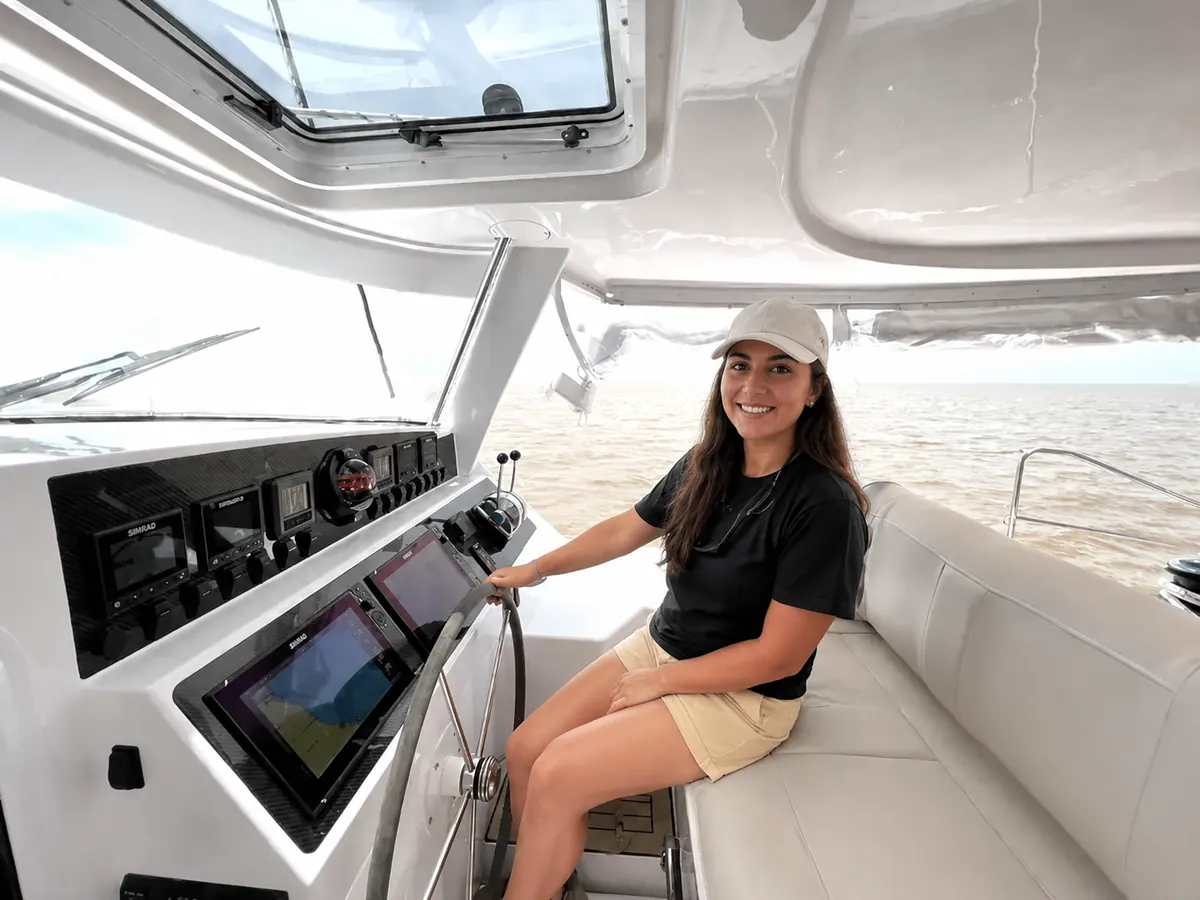
Weather protection
Shelter from rain, spray, sun, and wind keeps the watchkeeper effective when a passage becomes demanding rather than pleasant.
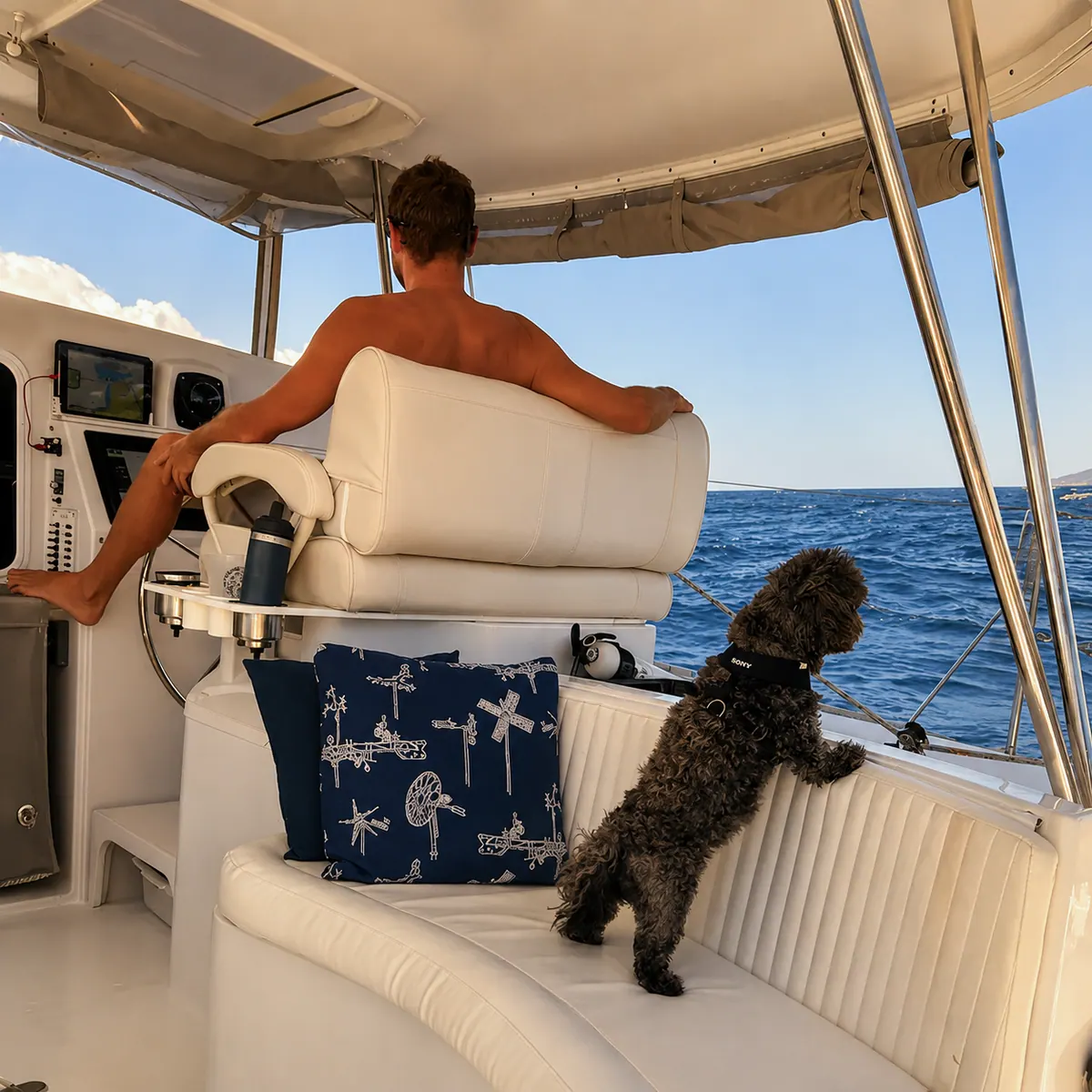
Long passages demand shelter, visibility, and connection. The Antares helm keeps the watchkeeper protected, alert, and part of the boat.
On an offshore cruising catamaran, the helm is not a fair-weather steering position. It is where weather awareness, sail-trim decisions, instrument checks, crew communication, and watch handoffs converge. Antares protects that position while keeping it connected to the cockpit and saloon, so the person on watch stays informed, can communicate without shouting, and can move safely through a handoff at any hour.
Shelter from rain, spray, sun, and wind keeps the watchkeeper effective when a passage becomes demanding rather than pleasant.
Sustained exposure draws down judgment. A sheltered position reduces that load across a multi-day passage when it matters most.
From the protected helm, the watchkeeper can see the four corners of the boat through a clear glass windscreen, with instruments and sightlines working together rather than competing.
Step into the Antares helm in the 360 tour and look around from the actual watch position. This is where the design starts to make sense: protected visibility forward and abeam, clear instrument placement, quick communication with the cockpit, and a direct view back into the galley and salon.
Forward, port, starboard, and back into the cockpit and salon flow.
Protected sightlines without making the helm feel boxed in.
A practical detail when visibility matters most.
The helm stays connected to life aboard, not isolated from it.
Interactive 360 tour of the Antares helm station. Pan and zoom to check visibility, windscreen protection, instrument placement, galley connection, and cockpit access.
These are the practical questions that reveal whether a helm design works for extended offshore use or looks adequate only during a marina walkthrough.
Use these questions to frame a more useful conversation about the Antares 44, Antares 46, and the way you plan to cruise.
Because exposure compounds fatigue, and fatigue degrades judgment. Shelter, clear visibility, easy communication, and a safe path through the watch change all contribute to better decisions over long passages.
On a well-designed boat, no. The Antares approach keeps the helm connected to the cockpit, saloon, instruments, and crew rather than treating protection as a reason to isolate the position.
Comfort is part of it. The more important value is sustained watchkeeping quality — particularly when weather, darkness, or fatigue make each small design decision count.
Antares University gives owners and serious buyers time aboard with the systems, layout, helm position, and day-to-day details that matter before cruising. It is the best way to understand how the protected helm works in real use — not just in photos.