Rudder blade protection
The skeg can take the first contact before the blade or stock takes the full load.

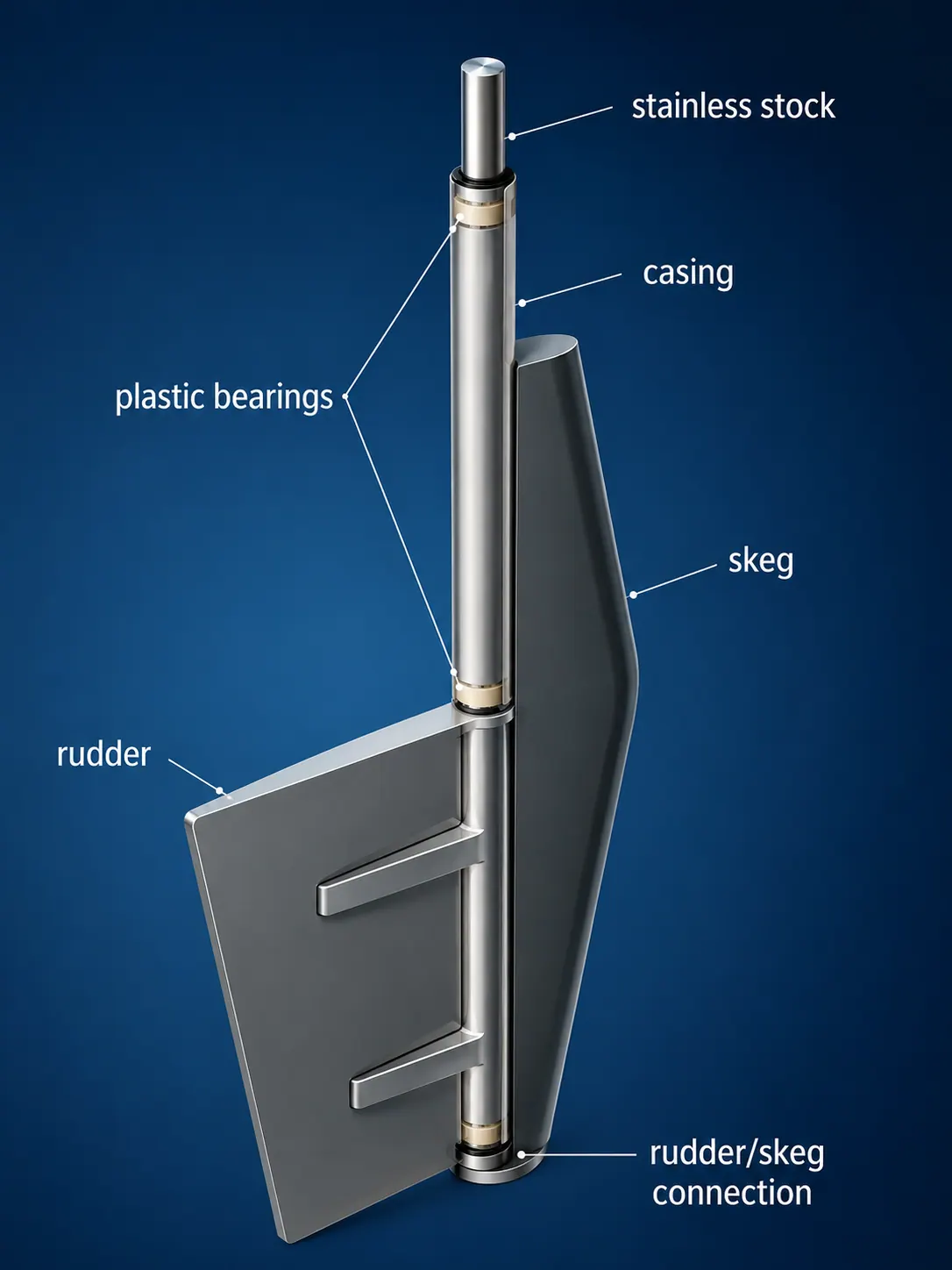
A fixed skeg sits just ahead of each rudder blade — positioned to take the first contact and support the rudder stock.
A skegged rudder uses a fixed skeg positioned just ahead of the rudder blade. In a contact event, the skeg is positioned to take the first load before the blade or stock. It also supports the rudder assembly, unlike a freestanding spade rudder. Neither arrangement is immune to damage. Antares uses skegged rudders to improve underwater protection, load support, and service options for offshore and remote cruising.
We struck a log and felt the helplessness of no steering and the closeness of a lee shore.
— Practical Sailor, “Sailing Without a Rudder”
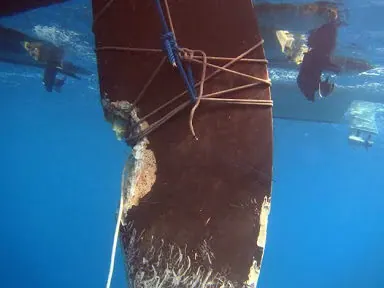
Practical Sailor’s account is about emergency drogue steering after a rudder loss — not proof that any rudder arrangement prevents one. Even careful skippers can lose steering after a debris strike, which is why underbody protection and an emergency steering plan matter together.
The skeg can take the first contact before the blade or stock takes the full load.
A skeg-supported rudder gives the stock support along the assembly instead of leaving it as a freestanding spade.
Skegged rudders give the underbody a structure that can support practical dry-out or beachable service in remote cruising grounds.
Use these at haulout or during a pre-purchase inspection.
Use these questions to frame a more useful conversation about the Antares 44, Antares 46, and the way you plan to cruise.
A rudder arrangement that uses a fixed skeg as a protective and supporting structure near the rudder blade. The skeg helps intercept direct impact and provides additional support for the rudder stock, changing how loads distribute through the assembly compared to a freestanding spade arrangement.
Steering loss offshore can become urgent, and rapid repair is rarely available far from a yard. Protection against grounding, debris, and impact loads is most valuable precisely when you are furthest from help.
No. It improves protection and load distribution, but contact hard enough to damage a spade rudder can still cause damage to a skegged arrangement. The value is meaningful improvement in tolerance and inspection confidence, not an absolute guarantee.
This is one of those details that feels abstract at the dock and very real offshore. Review how Antares protects the rudder, supports the stock, and keeps repairs more manageable when cruising far from home.