
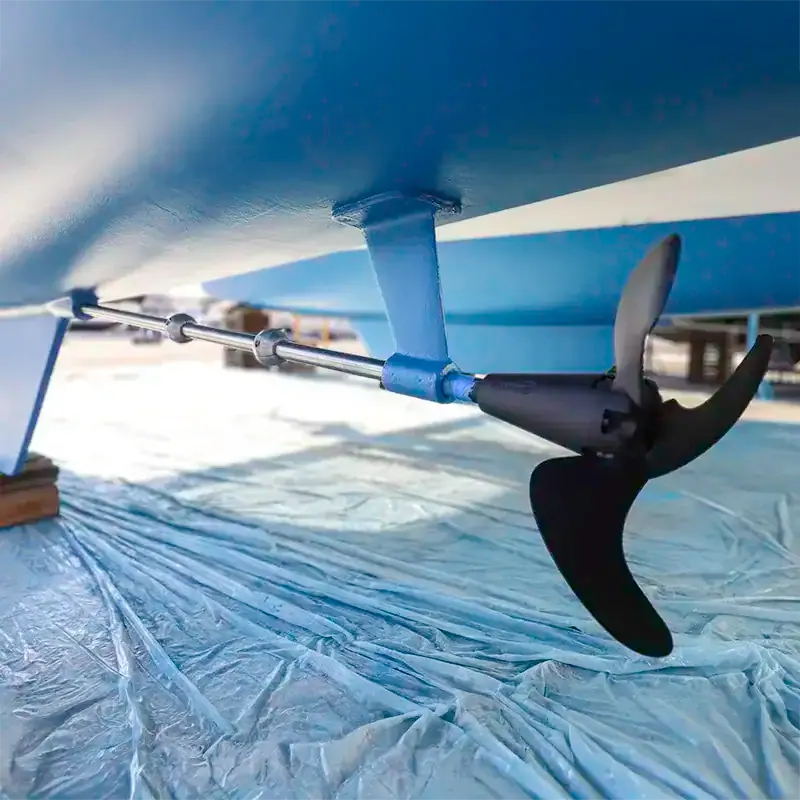
Self-sufficiency is easier when systems are accessible, documented, and understood before leaving the dock.
- The original maintenance and reliability guide is preserved below with its bluewater self-sufficiency structure.
- A cruising boat should help owners inspect, service, and understand systems without turning every problem into a yard event.
- Use the guide to discuss maintenance rhythm, spares, documentation, systems access, and owner handover.
The Captain’s Summary: True luxury isn’t just about fancy wood finishes. It’s about the confidence you feel when you can solve a maintenance problem in the middle of the Pacific, particularly when it comes to liveaboard catamaran maintenance. The Antares design philosophy prioritizes mechanical accessibility and robust systems (like shaft drives) to ensure owners remain safe, independent, and in control.
Key Takeaways for the Liveaboard Sailor
- Safety Through Access: Why midship engine placement beats the industry-standard “sugar scoop” squeeze.
- The Shaft Drive Advantage: Understanding why traditional shafts offer superior reliability over sail drives.
- Designed by Mechanics: Features like removable ceiling panels and eye-level generators streamline troubleshooting.
- Critical Redundancy: The essential spares kit for true off-grid independence.
The Antares Advantage: Midship Engine Accessibility
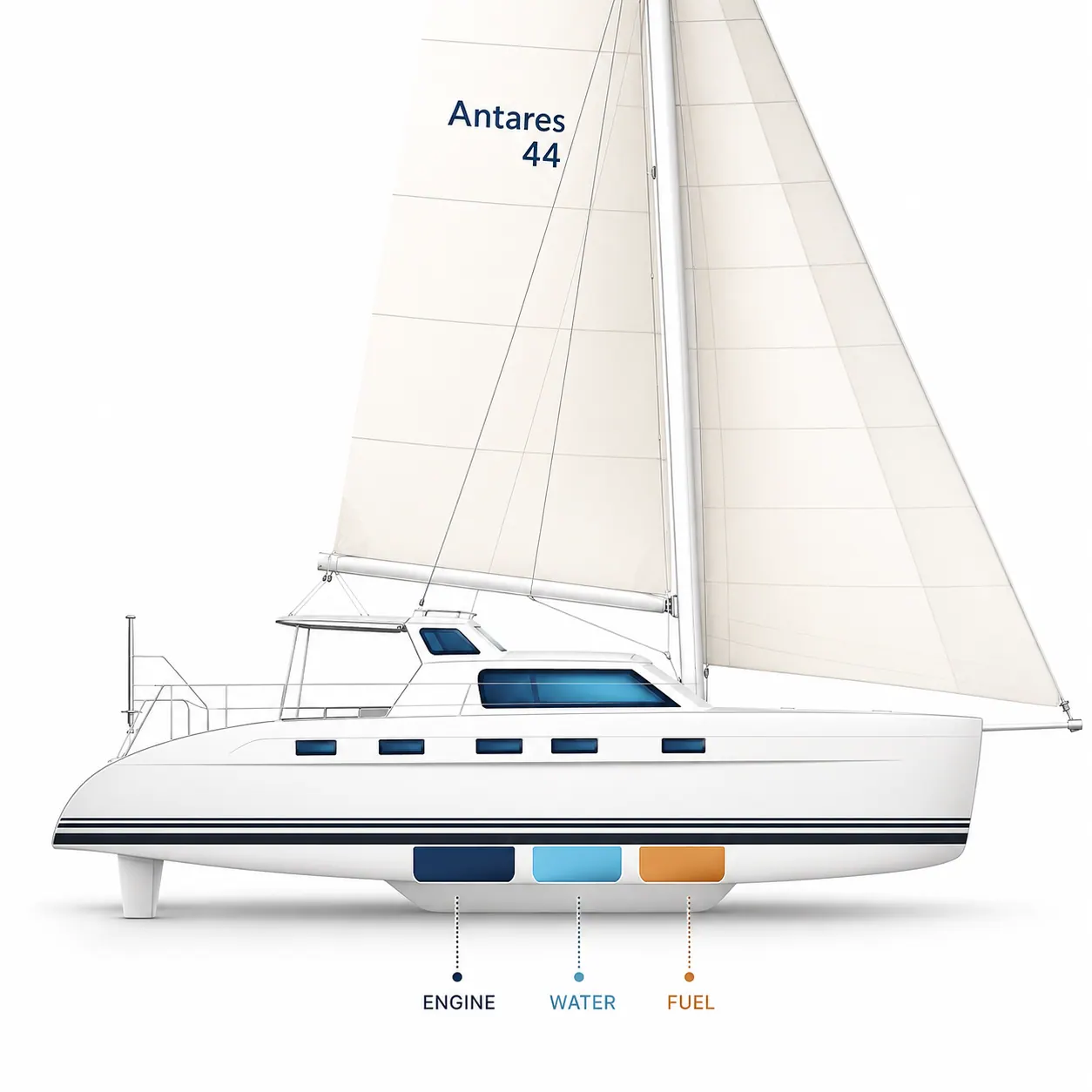
Antares 44 diagram showing engine, water, and fuel placement
On many production catamarans, engines are crammed into aft lockers or under bunks in the “sugar scoops.” Servicing them often means bending over a hot engine. Sometimes, you have to do this in bad weather or rough waves. This discourages routine checks and makes emergency repairs dangerous.
The Antares approach is distinct. We place the engines midship. This design choice has three main purposes. First, it centers the weight for better performance. Second, it allows for shaft drives. Most importantly, it provides easy access.
By simply lifting the floorboards, you can stand or lay comfortably next to the engine. You can see all around to check the bilges, change impellers, or inspect the raw water pump. This way, you avoid burns or injury. You can safely shift the transmission by hand while the engine is running. This is very hard to do on boats with engines at the back.
Shaft Drives vs. Sail Drives: A Matter of Security
One of the most debated topics in modern boat building is the propulsion system. Many competitors choose sail drives to cut manufacturing costs and save time. However, Antares stays committed to shaft drives.
The reasoning is simple: reliability and environmental safety. If a sail drive seal fails, transmission oil can leak directly into the ocean, causing environmental damage and leaving your drive train dry and destroyed without warning. Conversely, if a shaft seal weeps or leaks, the fluid is contained safely within the boat’s bilge. You can identify the issue, manage it, and continue your passage safely.
Furthermore, shaft drives eliminate the risk of the dreaded “electrolysis corrosion” that plagues aluminum sail drive legs. For the long-range cruiser, the peace of mind provided by a robust stainless steel shaft is non-negotiable.
Built by a Boatyard Owner, Not Just a Designer
The Antares design DNA stems from Ted Clemens, who ran a boatyard for two decades before designing the Antares 44. This experience means the vessel was engineered with future maintenance in mind. We don’t just build boats to be sold at boat shows; we build them to be serviced in remote atolls.
The “Eye-Level” Standard: On an Antares, you don’t belly-crawl to service your generator. It is positioned for easy access, allowing you to check fluids and connections comfortably. Similarly, electrical runs and plumbing are accessible behind removable panels. Unlike other builds where headliners are glued shut, hiding critical systems, Antares interiors feature removable sections. If you need to trace a wire or check a deck fitting, you can remove the panel. Do your work and put it back without damaging the joinery.
The Independence Kit: Critical Spares for Ocean Crossings
Even with the most robust systems, parts will wear. The difference between a minor inconvenience and a “mayday” situation is often the spares you carry on board. Because Antares owners tend to sail off the beaten path, we recommend a level of self-sufficiency that goes beyond the standard coastal cruiser.
Beyond standard consumables (filters, belts, zincs, and impellers), the prudent captain should carry:
- Watermaker Components: Specifically, a spare solenoid valve. If this small electromagnetic component fails, water production stops. A simple replacement ensures the tanks stay full.
- Fuel Lift Pump: For the generator, a spare fuel pickup pump is critical. Without it, the genset cannot pull fuel from the midship tanks, leaving you without your primary power generation source.
- Fresh Water Pump: Redundancy is key here. If the primary pump fails, having a swap-in replacement ensures life aboard continues normally.
- Outboard Propeller: Your dinghy is your car. A spare prop ensures you are never stranded on the mothership.
Maintenance Specs: Antares vs. Standard Production
| Feature | Standard Production Catamaran | Antares Catamaran |
|---|---|---|
| Propulsion | Sail Drives (Aluminum leg) | Shaft Drives (Stainless steel) |
| Oil Leak Consequence | Oil escapes to ocean; drive failure | Contained in bilge; drive remains operational |
| Engine Access | Aft “Sugar Scoop” / Under Bunk | Midship / Under Floorboards |
| Rudder Protection | Spade Rudders (Exposed) | Skeg-Hung Rudders (Protected) |
| Bottom Cleaning | Requires Haul-out | Capable of beaching for maintenance |
Conclusion
A luxury catamaran is not just about its appearance at the dock. It is also about how it performs when it needs help 1,000 miles from shore. The Antares is designed to empower the owner. You have easy access and strong shaft drives. The systems are clearly laid out. You are not just a passenger on your vessel; you are a skilled Captain.